01
pre-training
Making your legacy proprietary engineering data and toolchain AI-ready is one of the toughest challenges. Most organisations haven't started.
Battery validation takes 12–18 months and costs millions annually.
vetta replaces physical testing with AI-driven simulation — trained on your cell chemistry, deployed inside your infrastructure.
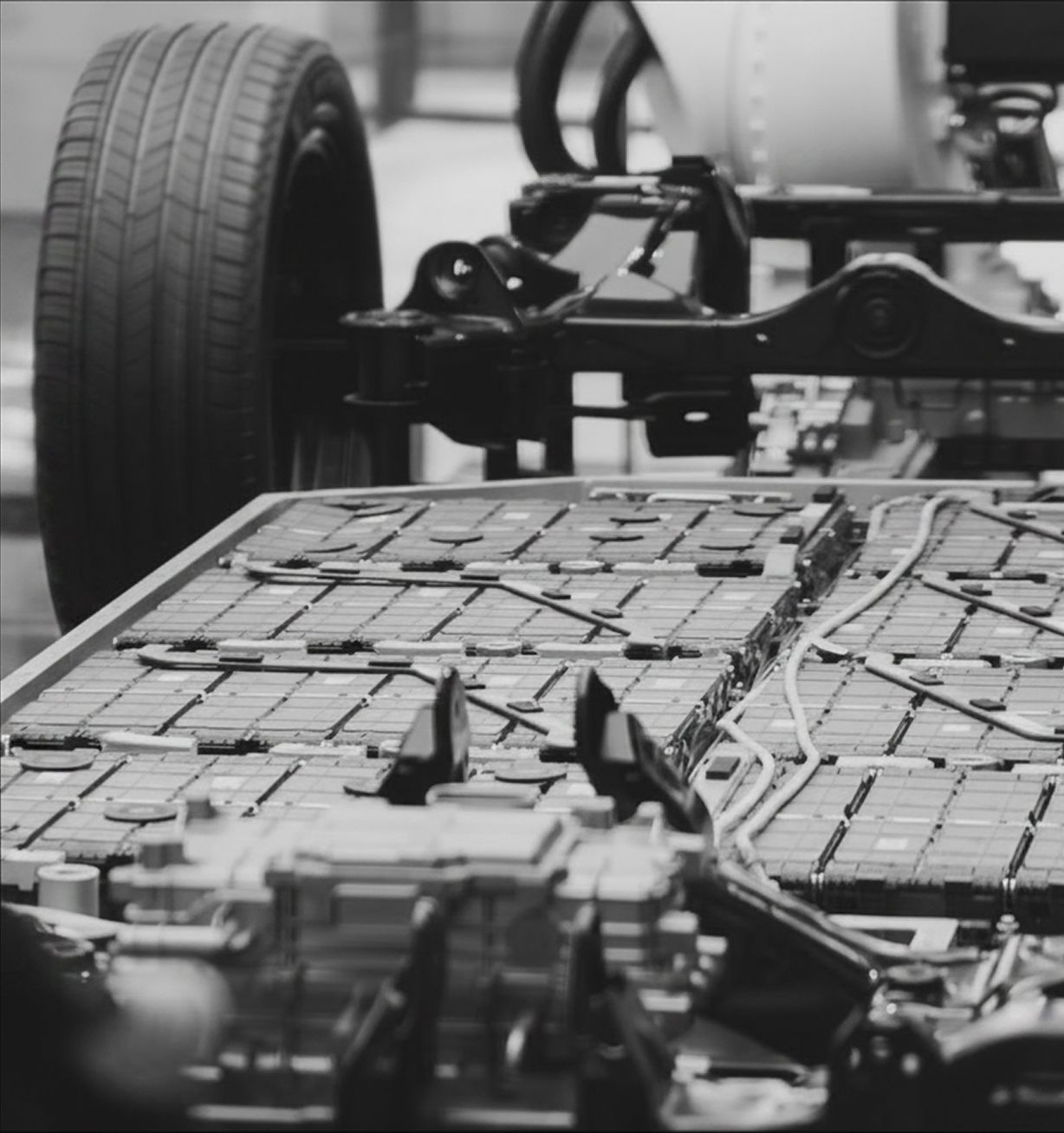
Teams test across temperatures, C-rates, SOC windows and usage profiles and wait. By the time the data arrives, pack geometry, cooling architecture and BMS software decisions have already been made. Millions committed downstream.
This is not an engineering failure. It is a process failure.
One model. All battery knowledge.
One model.
All battery knowledge.
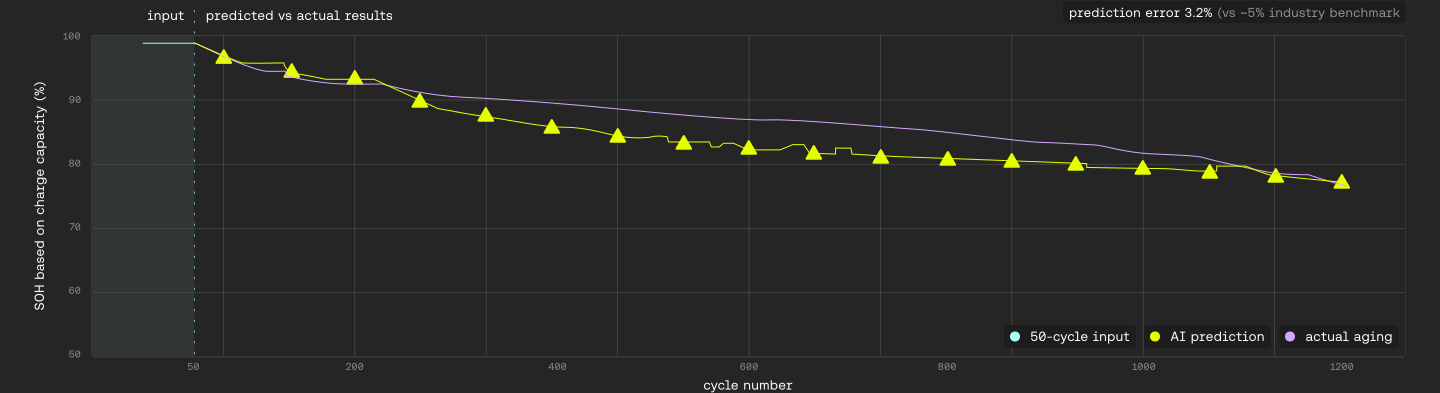
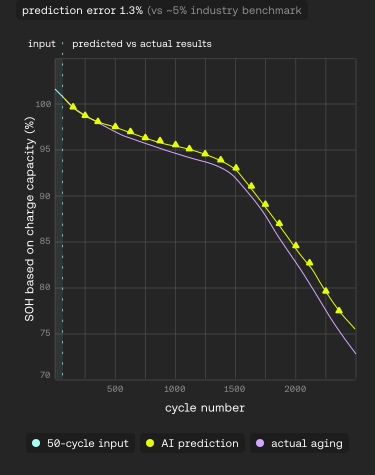
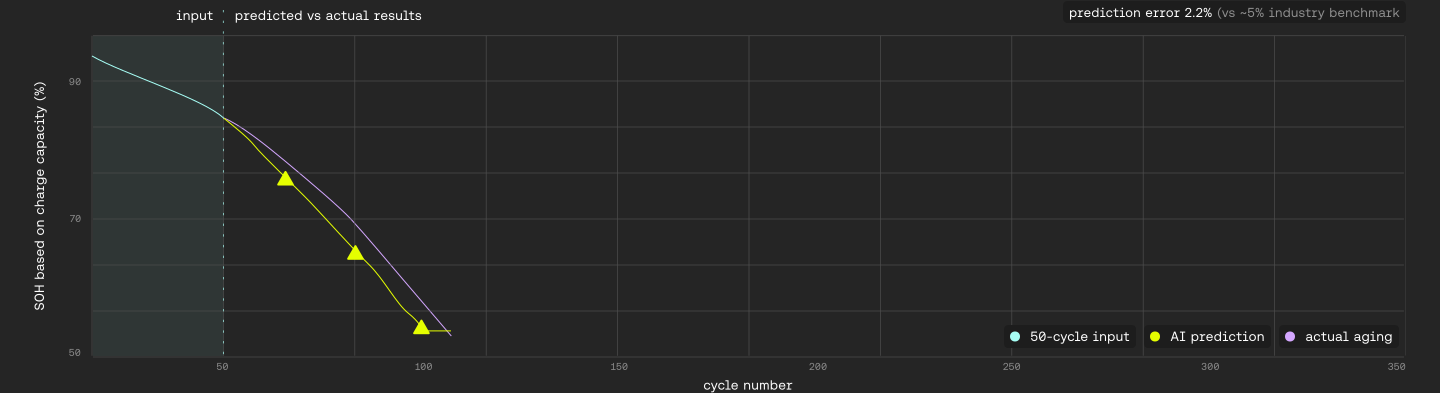
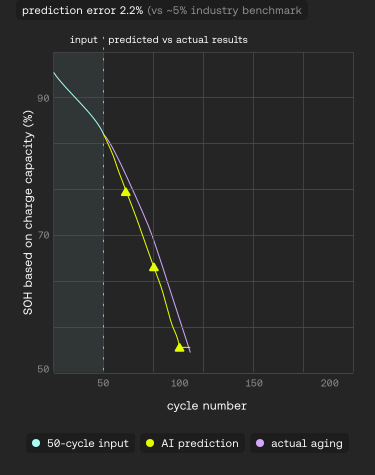
vetta combines every test ever run, simulation data and new validation results into one continuously improving battery intelligence model. Engineers can predict cell ageing and performance using only the first weeks of cycling data.
Three steps from raw data
to battery intelligence
Three steps from raw data
to battery intelligence
pre-training
Making your legacy proprietary engineering data and toolchain AI-ready is one of the toughest challenges. Most organisations haven't started.
fine-tuning
Engineering complex physical products needs many disciplines. AI doesn't change that — it has to work within it.
inference
Your products and customers are unique. Real competitive advantage requires AI built around your specific process.
Simulation results
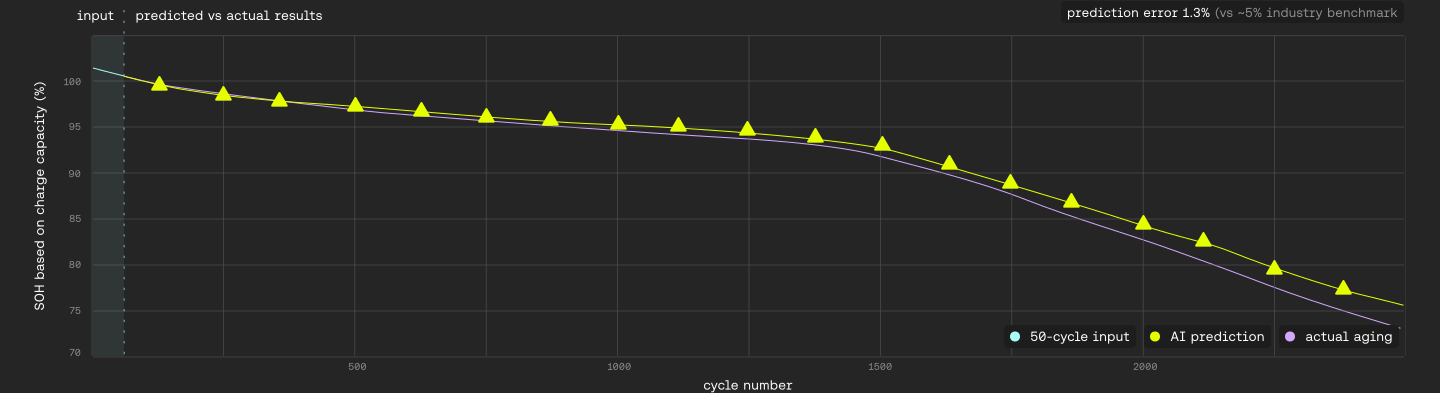
use cases
What your team
can do with it
What your team can do with it
faster engineering decisions
Reliable lifetime predictions after weeks of cycling data. No more waiting 12+ months before making design, sourcing or certification decisions.
reduced test matrix
Simulate untested combinations of temperature, C-rate, SOC window and usage profiles. AI identifies which experiments can be skipped — typically 30% fewer physical tests.
automated
P2D & ECM parametrisation
Automatically parametrise Pseudo-2D and Equivalent Circuit Models from initial test data. Production-ready physical models in a fraction of the time. Ready for Simulink, FMU or BMS-ready code.
virtual cell qualification
Simulate end-of-life behaviour for new cell candidates before committing to full testing. Pre-screen suppliers and chemistries from minimal early-cycle data.
how we deploy
Not a pilot. A permanent
operating relationship.
Validate the use case using your historical engineering data and demonstrate measurable value within a focused engagement.
Payback in months, not years
One unified battery intelligence model trained on your historical test data, deployed
inside your own infrastructure.
weeks to first prediction
30% fewer physical tests
<2%
simulation error