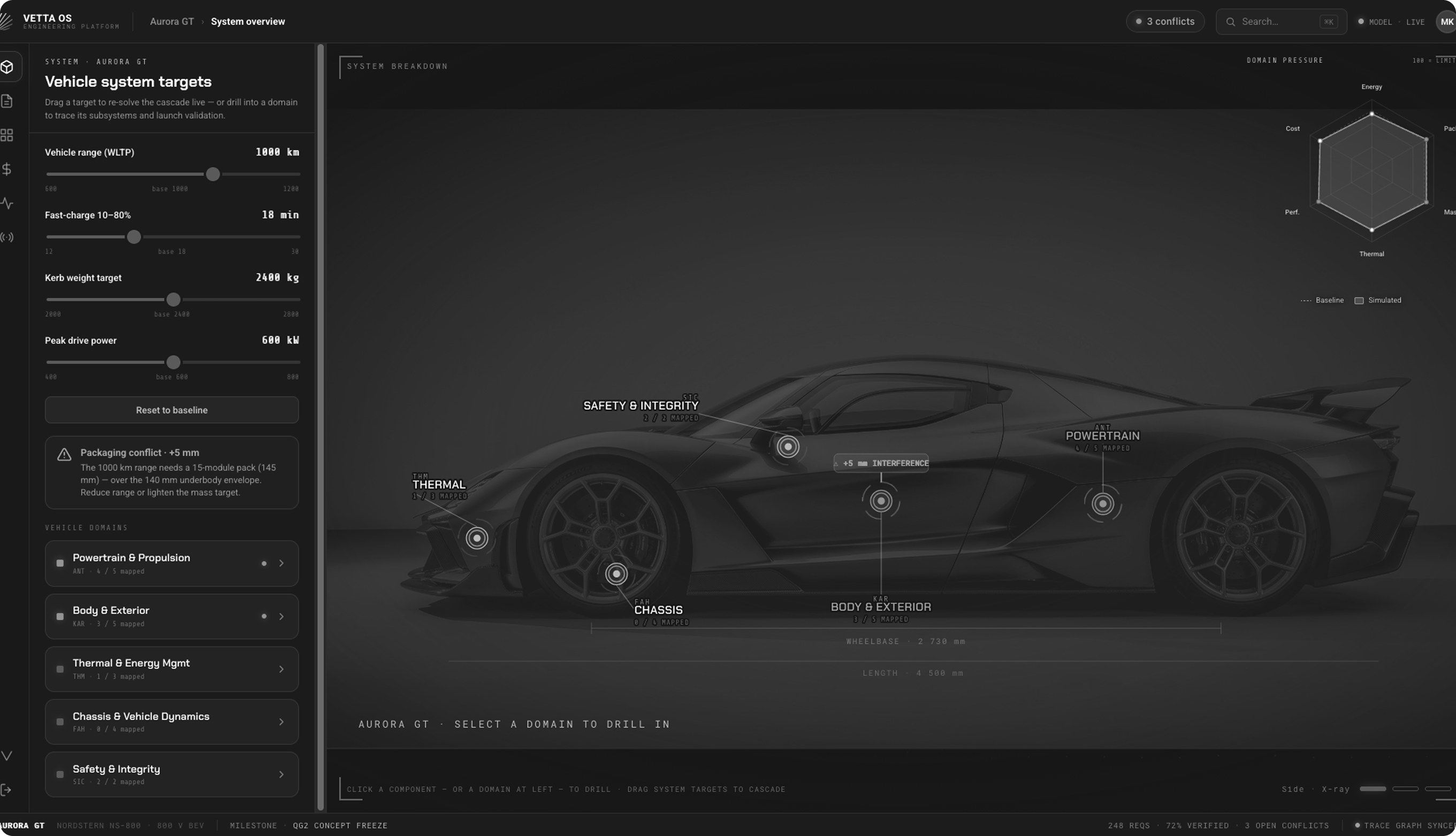
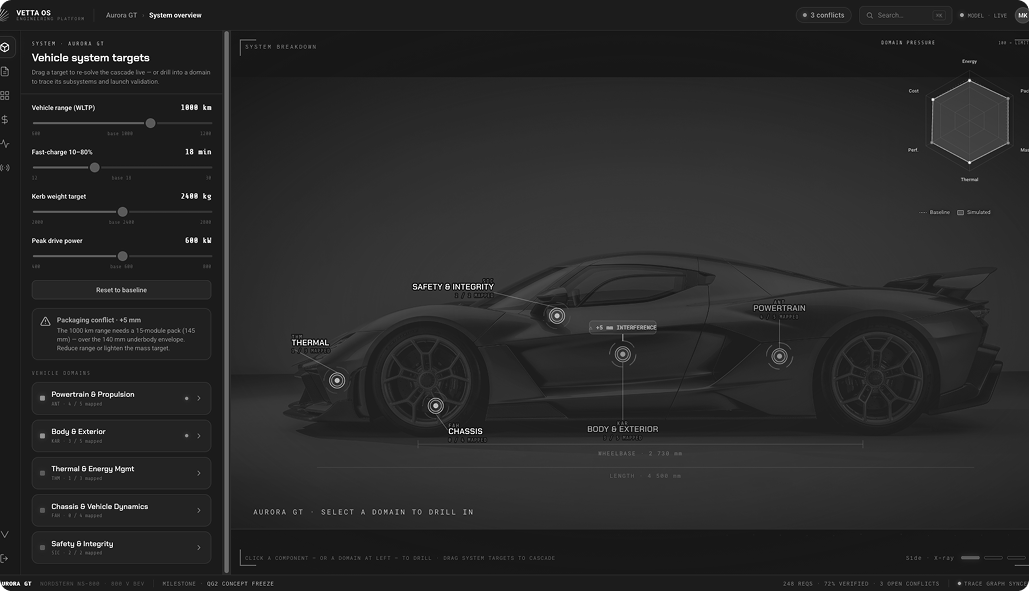
system requirements

Requirements Management

From scattered teams to one living requirement model

  • 1single source of truth across teams
  • 100%requirements traced to their source clause
  • real-timeconflict & impact flagging
  • system → parameterfull hierarchy, automatically reconstructed

Once the details are out of a specification, the hard part begins: requirements have to be organised, kept current, and reconciled across every
team that touches them.

Managing this by hand - across documents, revisions and
inboxes - creates severe operational bottlenecks and lets critical changes slip through unseen. vetta holds every requirement in one structured, traceable model, so every team works from the same source of truth.

Built to perform

From concept requirements to system and component specs in seconds. Physics-informed AI, trained on every project you've run.

vetta

One engine. All specification knowledge.

VETTA digests every lengthy engineering document, historical offer and compliance standard, then turns scattered files into one structured requirement model - organised by hierarchy, connected to its source evidence, and shared across teams. Instantly cross-reference past quotes, retrieve hidden technical targets, surface structural project risks, and see conflicts the moment they appear - all in less than five minutes.

features

What your team

can do with it

01

structured requirement hierarchy

Go from a pile of documents and revisions to one organised hierarchy - system to parameter - that reflects how your product is actually built. Every requirement sits in context, at the right level of detail, instead of buried in prose.

02

traceability to source

Every requirement links back to the exact clause it came from. Follow any target down to its evidence - or up to the system requirement it derives from - so decisions can always be justified and audited.

One source of truth,


from day one

One unified requirements operating system, built on your historical program data

and deployed securely inside your own infrastructure - so every team works from


the same live model.

every requirement traced to source

teams synced in real time

conflicts flagged before the build

run a proof of concept