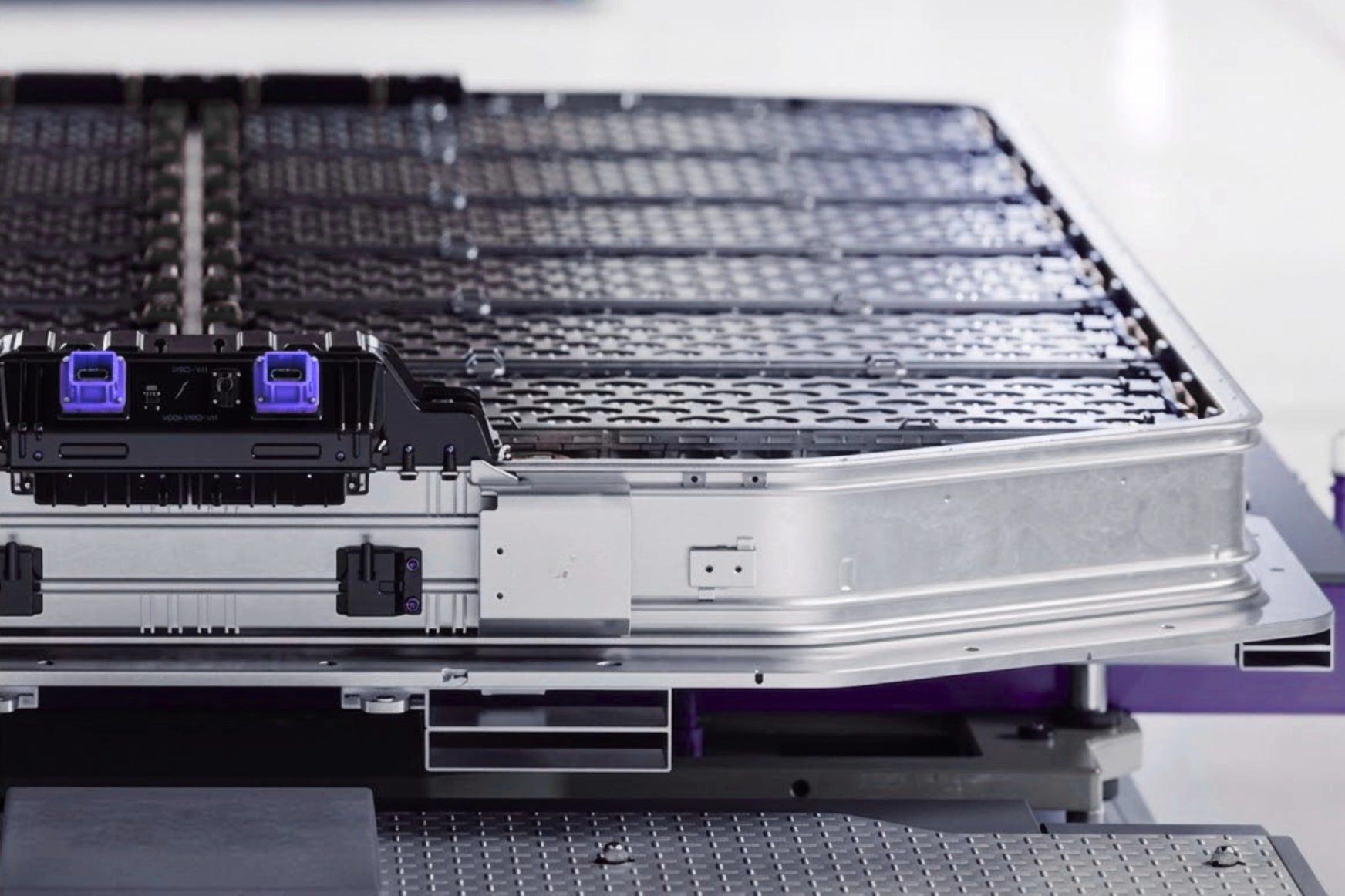
AI-Powered SOC and SOH Monitoring for Utility-Scale BESS Fleets
Independent power producer operating a utility-scale BESS fleet

The situation
Battery Energy Storage System (BESS) operators are scaling fast, but the Battery Management Systems (BMS) delivered with each asset provide only raw operational data. They neither model battery degradation nor accurately predict End-of-Life (EOL). In addition, the reported SOC drifts from the battery’s true electrochemical state. For this independent power producer, with a growing multi-site BESS fleet, this created a critical information gap. State-of-Health (SOH) and SOC values were entirely based on manufacturer reporting, leaving no independent way to validate battery health, assess remaining useful life, or optimize dispatch according to the fleet's actual available capacity.
The challenge
How vetta changes the process
vetta combines historical tests, simulations and new validation data into a single battery intelligence model. Weeks of testing become years of insight.
The approach
A physics-informed model, deployed where the data lives Sphere Energy deployed VETTA Battery Intelligence, the same battery foundation model behind Sphere's cell-validation services, reconfigured for real-time, fleet-scale BESS monitoring.
Pre-trained on thousands of real battery tests and physics-based degradation simulations, VETTA starts with an embedded engineering understanding of how cells age rather than relying on learning those complex patterns solely from the client’s operational data. The model was subsequently fine-tuned using the client's specific cell chemistry and cycling data generated directly within Sphere Energy’s in-house battery testing center.
The result is a hierarchical view of battery health and availability, from individual cells and modules up to racks, Energy Storage Containers (ESCs) and the complete site.
What changes for the asset manager
Instead of relying on manufacturer-reported coulomb counting, the asset manager now receives a model-backed, audit-grade SOH estimate per component, a 10-year degradation forecast with p5/p95 confidence bands, and SHAP-driven root-cause analysis pinpointing whether a unit is degrading faster than fleet average due to temperature stress, depth-of-discharge patterns, C-rate abuse, or a manufacturing outlier.
At the same time, highly accurate SOC estimation provides a reliable picture of the fleet's true available capacity, enabling more precise dispatch decisions, higher asset utilization, and improved financial performance throughout the system's lifetime.
The results
The cells have been tested and the model has been fine-tuned. Deployment is planned to follow final validation.
Fleet-wide transparency: Precise SOC and SOH and EOL insights across all hierarchy levels, from cell to ESC and the entire site.
Predictive maintenance: Early detection of safety critical parameters and automated alerts before failure or warranty breaches.
Full data sovereignty: On-site deployment keeps raw telemetry within the asset boundary while delivering AI-powered monitoring locally.
Independent audit trail: Warranty discussions and EOL assessments are no longer dependent on manufacturer-reported data.