CAD Workflow Automation: From Customer RFQ to Validated Geometry in Minutes
Tier-1 engineering team turning multi-page tender specifications into verified CAD models and manufacturing cost estimates on demand.
The situation
Bidding teams spend days redrawing existing parts and recalculating costs just to see if a customer tender is technically feasible.
When technical specifications arrive during a competitive tender, submission deadlines are notoriously tight. Yet bridging customer requirements to actual 3D geometry is bogged down in manual, disconnected handovers. Design engineers manually comb through sprawling CAD libraries searching for a similar starting component, manually check package dimensions against specification clauses, and rebuild models from scratch.
Once a candidate design exists, it moves into an equally manual estimating queue. Estimators count holes, bends, and welds by hand to calculate cycle times and material costs. By the time design feasibility, structural viability, and part costs are consolidated, days or weeks have passed. Engineering teams are left with no bandwidth to explore lighter, lower-cost design alternatives or refine the bid before submission.
The approach
An integrated pipeline connecting requirement extraction, geometric retrieval, and parametric adaptation.
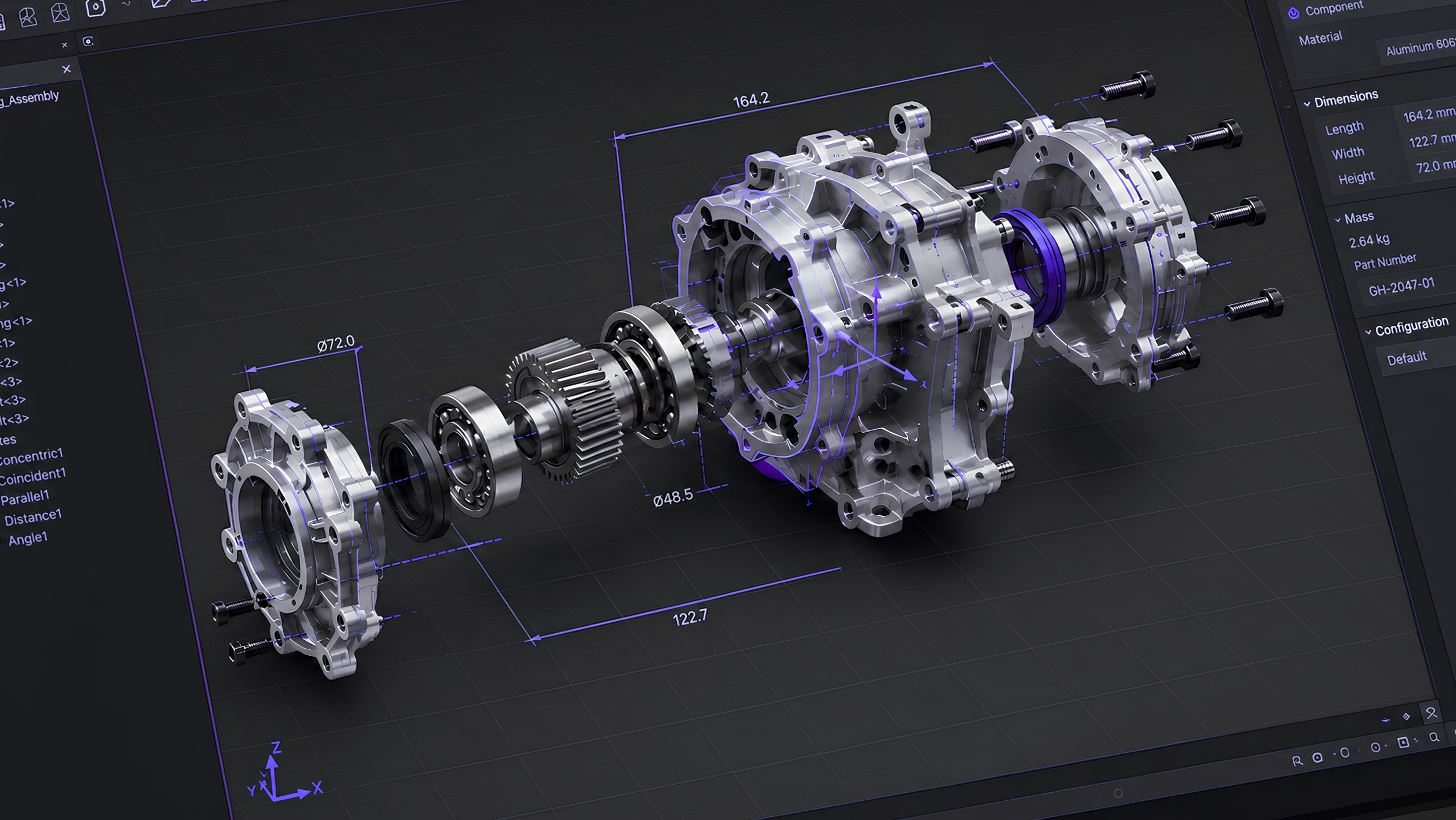
Sphere integrated VETTA CAD Designer to unify specification analysis, CAD repositories, and manufacturing costing into an automated, interactive workflow. When an RFQ document is uploaded, the engine automatically extracts design constraints, loading limits, and packaging requirements. It queries internal CAD libraries to retrieve the closest matching validated components with high geometric accuracy.
VETTA then performs an automated delta analysis between the baseline geometry and the new customer requirements. It detects failing features, suggests precise parametric modifications to satisfy the specification, and directly calculates manufacturing cost drivers based on native machine capabilities and cost rates. The lead engineer remains in complete control: reviewing visual diffs, confirming proposed geometry adaptations, and releasing the validated CAD model and BOM to the customer in a few clicks.
What changes for the engineer
Instead of rebuilding existing geometry from scratch, cross-referencing PDFs against 3D assemblies by hand, and waiting days for separate costing calculations, the engineer works from an intelligent, guided workspace. Feasible variants, required geometric changes, and manufacturing costs are visible within minutes of receiving a specification, leaving more time for engineering judgment and maximizing tender win rates.