From Months to Days:
AI Powered Bttery Validation
Leading Global Automotive OEM
The situation
Validating battery cells through physical testing is extremely time- and resource-intensive. A standard end-of-life (EoL) validation process for a single cell can take months, or even years. The client needed to make better use of historical data and reduce the number of physical Design-of-Experiments (DOE) test series required.
The challenge
How vetta changes the process
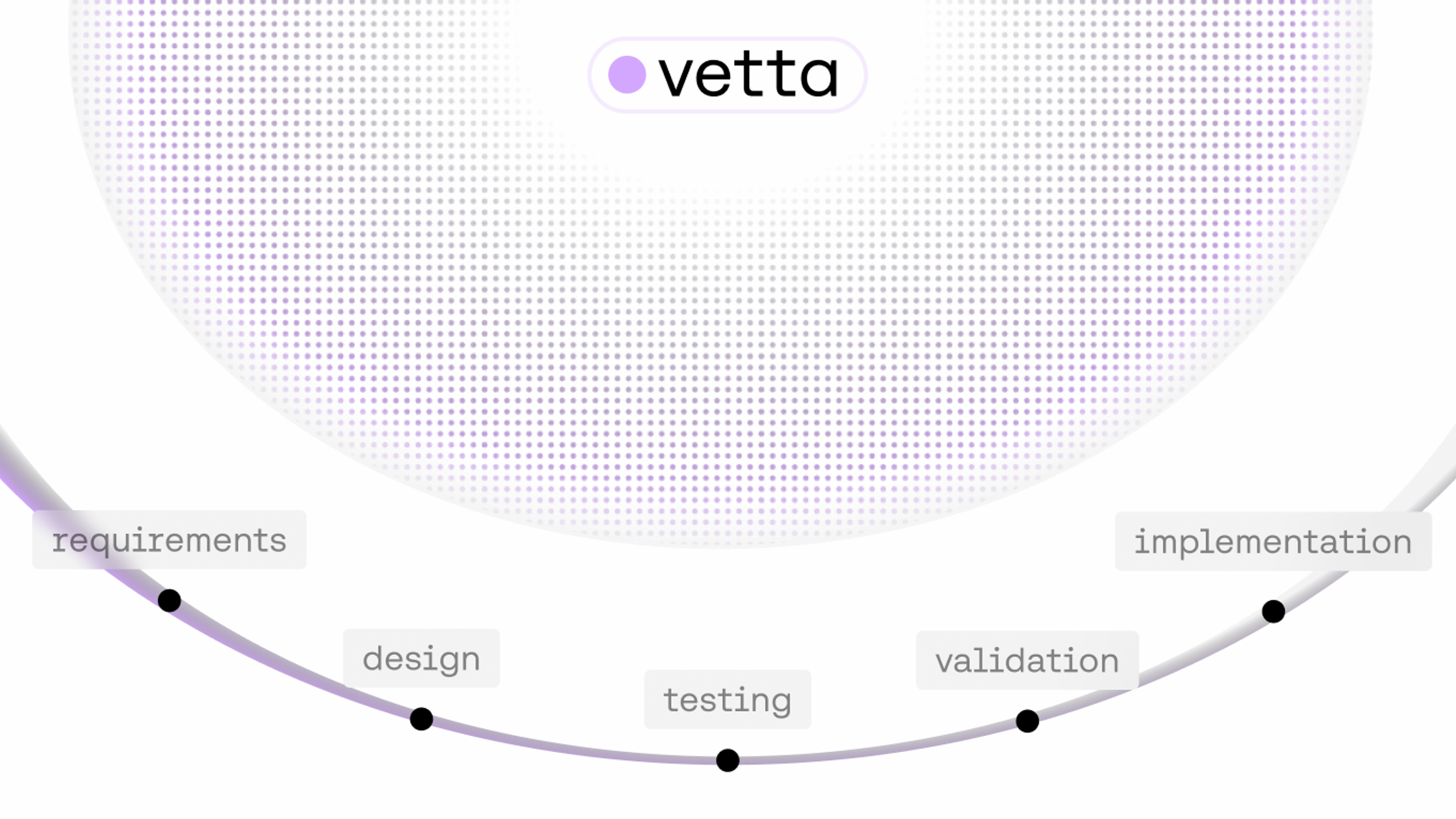
vetta combines historical tests, simulations and new validation data into a single battery intelligence model. Weeks of testing become years of insight.
The approach
A Foundation Model for Battery Aging – Tuned to the Client's Cells
Sphere used VETTA, its time-series foundation model pre-trained on 10+ million synthetic datasets and thousands of real cell tests. The approach comprised:
Model Fine-Tuning
The pre-trained model was refined using the client's specific cell data.
Hybrid Simulation
A combination of data-driven AI and physics-based modeling (P2D models) to not only predict but physically explain varying degradation mechanisms, such as SEI growth, lithium plating, etc.
Defined Use Cases
Three specific use cases were defined: DOE optimization for 2 cell types, and transfer learning to a new cell for further validation.
What changes for the engineer
Instead of waiting months for a full DOE test campaign, the engineer feeds the first few weeks of cycling data into VETTA and receives an end-of-life prediction together with the physical degradation drivers behind it within days. This supports earlier go/no-go decisions and a smaller, more targeted physical test matrix.
The results
The model moved directly from proof of concept to a validated prediction tool, integrated into the client's cell validation workflow across multiple cell types and projects.
Prediction accuracy of ~ < 3% MAPE achieved for DOE optimization
Zero-shot transfer to new cell types achieved under 3% error, improving to under 2% MAE with just 150 cycles of data
Degradation mechanisms confirmed predictions aligned with known physical drivers such as SEI growth and lithium plating
Early test termination enabled by flagging tests likely to miss requirements before they run to completion